July 2026
Cycle One Launch
Complete baseline week and begin four-week progression block.

Educational content only — not medical advice. Free information; we do not sell products or coaching. About us
Progressive training means your sessions get slightly more demanding over time — then ease back so your body adapts. Without gym weights, you progress through reps, tempo, rest intervals, and harder exercise variations. This page lays out a complete four-week cycle you can repeat with new variations each month.
Record starting numbers for six exercises: push-ups (or incline version), squats, table rows, lunges each leg, plank hold seconds, and a sixteen-minute cardio interval count. Train three days — Monday strength A, Wednesday cardio, Friday strength B — each session fifteen to twenty minutes including warm-up. Leave two reps in reserve on every set; nothing should feel maximal.
Baseline week is data collection, not heroics. Write reps, hold times, and how you felt on a 1–5 energy scale. Note your training time slot. This log becomes the reference for every progression decision in weeks two through four. Skipping baseline week makes later overload guesses instead of informed steps.
Increase each strength exercise by one to two reps per set or add one interval round to cardio. Keep rest periods unchanged — typically ninety seconds between strength sets, thirty seconds during cardio work intervals. If any exercise exceeds fifteen reps comfortably, plan a harder variation for week three instead of chasing twenty-plus reps indefinitely.
Volume progression guidance often suggests small weekly increases — for example, two extra squats or one additional cardio round. If form wavers, stay at your previous level another session before advancing. Adjusting pace gradually is a common approach in general fitness planning.
Push pattern + rows + plank — add 1–2 reps per set.
Add one interval round or shorten rest by 5 sec.
Squats + lunges + bridges — add 1–2 reps per set.
Swap one exercise per session for the next progression level: incline push-ups to floor push-ups, bodyweight squats to pause squats at bottom, table rows to feet-elevated rows, regular lunges to split squats, plank to plank shoulder taps. Cardio swaps marching for step-ups or adds shadow boxing intervals. Maintain week two volume on non-swapped exercises.
Variation changes neural demand — expect slightly higher perceived effort even at similar rep counts. Focus on smooth tempo, especially three-second lowering phases. This week often feels hardest psychologically because movements are unfamiliar. Trust the process; week four consolidates gains.
Reduce total volume by twenty percent — if you did three sets of twelve squats, do three sets of ten. Keep exercise variations from week three but shorten cardio by two interval rounds. Deload weeks prevent accumulated fatigue and prepare you for the next cycle starting at week two volume with new variations.
Many structured training plans include a lighter week every fourth cycle to manage fatigue. Use extra time for stretching and breath work. Review your four-week log: note session counts, exercises that felt smooth, and preferred session times. Plan cycle two around areas you want to practise more — perhaps extra row volume if push-ups felt easier than pulling.
Cycle reset: After week four, restart at week two rep counts using new exercise variations. Rotate push-up styles, lunge directions, and cardio patterns monthly.
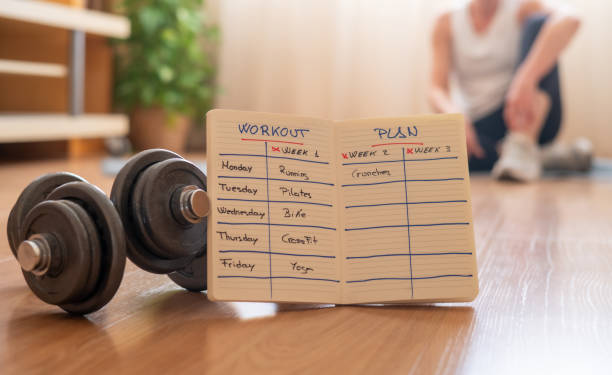
A notebook beats relying on memory. Columns: date, session type, exercise, sets, reps or seconds, RPE, notes. Progress markers beyond rep counts include smoother tempo, shorter rest needed, better balance in lunges, and returning to daily life less winded after cardio. Take monthly side photos or video one set for form comparison if that motivates you.
Avoid changing every variable at once — adjust volume OR variation OR rest, not all three simultaneously. When life disrupts training, repeat a deload week rather than quitting. Progressive plans work because they are boringly consistent, not because any single session feels extraordinary.
Use the Daily ChecklistProgress gradually — sudden large volume jumps raise injury risk. Deload when sleep, mood, or performance decline across multiple sessions. Consult qualified professionals before progressing high-impact variations if you have joint concerns.
July 2026
Complete baseline week and begin four-week progression block.
August 2026
Compare week one and week three logs; adjust weak exercises.
September 2026
Week four deload then start cycle two with new variations.