Table Row
3×8–12. Keep body rigid; squeeze shoulder blades at top.

Educational content only — not medical advice. Free information; we do not sell products or coaching. About us
Strength at home is about controlled tension, progressive volume, and balanced push-pull-leg patterns — not about lifting the heaviest object in the room. These fifteen-to-twenty-minute sessions target major muscle groups using bodyweight and household surfaces, with clear rep ranges and form cues so you know exactly what each set should feel like.
Horizontal pushing loads the chest and front shoulders. Standard push-ups — hands slightly wider than shoulders, body straight, elbows at forty-five degrees — are the benchmark. Incline push-ups on a kitchen bench reduce load for beginners. Decline push-ups with feet on a low step increase challenge for advanced trainees. Aim for three sets of six to twelve reps with ninety seconds rest between sets.
Vertical pushing without weights uses pike push-ups — hips high, head travels toward floor between hands — to emphasise shoulders. Start with hands on a chair seat for a gentler angle. Pair push days with tricep-focused chair dips: three sets of eight to ten reps, shoulders away from ears, slow lowering phase. Record your incline angle each week as you progress toward floor push-ups.
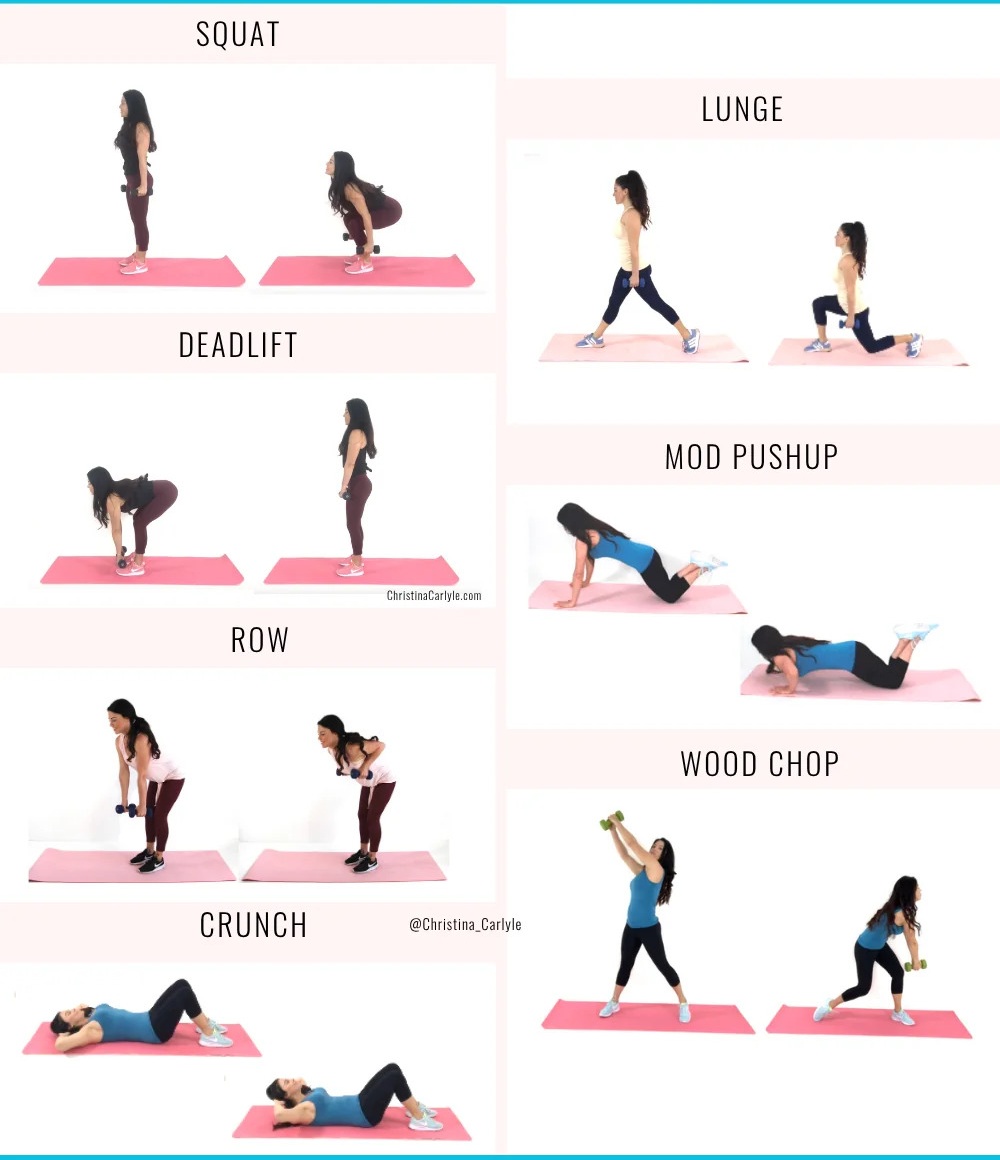
Pulling balances all that pushing. Without a pull-up bar, use inverted rows under a sturdy table — grip the edge, body straight, pull chest toward the table. Elevate feet slightly for more challenge or bend knees to reduce load. Towel door rows work if the door is solid and locked — loop a towel around the handle, lean back, and pull. Target three sets of eight to twelve reps.
Reverse snow angels lying face down strengthen upper back and rear shoulders — lift arms in an arc without shrugging. Prone Y-T-W raises on the floor add scapular control that may support posture during desk work. A common general guideline is to include pulling movements alongside pushing exercises. Include at least one pull-dominant exercise every strength session.
3×8–12. Keep body rigid; squeeze shoulder blades at top.
3×10 slow reps. Forehead lightly on towel.
3×10. Only on secure doors; stop if handle shifts.
Lower body sessions anchor home strength programs. Bodyweight squats — three sets of twelve to fifteen — build quad and glute endurance. Split squats with rear foot on the floor challenge balance and single-leg strength: three sets of eight each leg. Bulgarian split squats with rear foot on a low chair increase range; hold a wall for balance initially.
Wall sits develop isometric quad strength — hold thirty to sixty seconds for three rounds. Calf raises on a step edge load the lower leg for walking and stair climbing. Tempo matters: four seconds down, one second up on squats increases time under tension without adding weight. Slower lowering phases are a widely used way to add challenge at moderate rep counts.
Planks train anti-extension — resist lower back sagging. Side planks target obliques and lateral hip stability. Dead bug and bird-dog patterns teach spine neutrality while limbs move. Hollow body hold on the floor builds anterior core tension. Avoid rapid crunches that tug the neck; favour holds and controlled anti-rotation moves like slow mountain climbers — four counts per knee drive.
Sample core finisher after leg work: thirty-second plank, twenty-second side plank each side, ten dead bugs each side, repeat twice. Breathe steadily — exhale during effort. Core fatigue often limits squat depth before legs fail; a strong midsection supports every other strength pattern in this guide.
Day A — Upper: incline push-ups 3×10, table rows 3×10, chair dips 3×8, plank 3×30 sec. Rest ninety seconds between sets. Day B — Lower: squats 3×15, reverse lunges 3×10 each leg, glute bridges 3×15, wall sit 3×40 sec. Alternate days with at least one rest or cardio day between. Complete each day within twenty minutes including warm-up.
Warm-up both days with two minutes arm circles and leg swings plus ten easy squats. Cooldown with chest and hip flexor stretches. Progress by adding two reps per set weekly or moving to harder push-up and squat variations every third week. Log numbers — visible progress keeps motivation grounded in data rather than vague feelings.
View Progressive PlansStop sets when form deteriorates — sagging hips in planks or knees caving in squats signal fatigue. Allow forty-eight hours between intense strength sessions for the same muscle groups. Seek professional guidance for existing joint or back concerns before inverted rows or deep lunges.
July 2026
Move one step down incline angle each week toward floor reps.
August 2026
Add two squats per set daily; deload on day seven.
September 2026
Double table row volume to match weekly push-up totals.